Corvette C4
1984–1996
The Digital Renaissance
The C4 Story
After a long C3 run, the C4 was a ground-up redesign built to bring Corvette into the modern era. It introduced a new chassis, an all-aluminum suspension, a digital instrument cluster, and a focus on handling that repositioned the Corvette as a genuine driver's car. The C4 also saw the return of the convertible and the launch of the legendary ZR-1.
Design Evolution
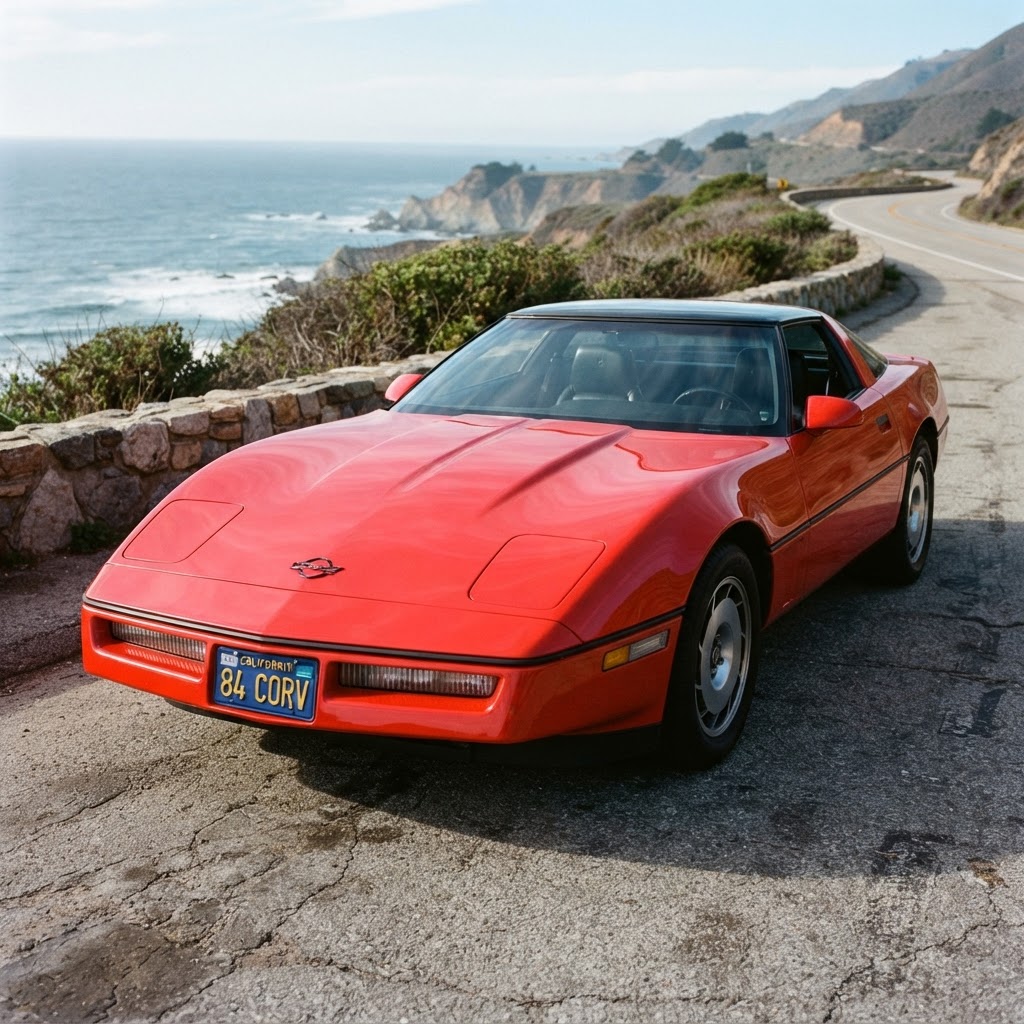
The C4's wedge profile, large glass hatch, and squared-off lines reflected 1980s design thinking. The interior was a leap forward in technology, with a digital dashboard and a driver-focused cockpit. Later years softened some of the sharpest edges and improved materials, culminating in the refined Grand Sport edition of 1996.
Performance & Engineering
The C4 was engineered to handle, with a unitized frame, modern geometry, and later the LT1 and LT4 small-blocks that revived output after the lean years. The ZR-1's DOHC LT5, developed with Lotus, produced 405 horsepower and set a new benchmark for American performance, proving the Corvette could compete globally.
Key Characteristics
- All-new chassis with aluminum suspension components
- Digital instrument cluster
- Convertible returned in 1986
- LT4 and the 405-hp ZR-1 halo model
Milestones of the Era
All-new C4 launched; no 1983 model was sold to the public.
Convertible returned with the first Indy pace car replica.
ZR-1 arrived with its Lotus-engineered LT5 V8.
Grand Sport edition closed out the C4 in style.
Interesting Facts
- ★
Only one 1983 Corvette survives — it lives in the National Corvette Museum.
- ★
The ZR-1 set multiple endurance speed records at Fort Stockton, Texas.
- ★
The digital dash was polarizing but pioneered the modern Corvette cockpit.