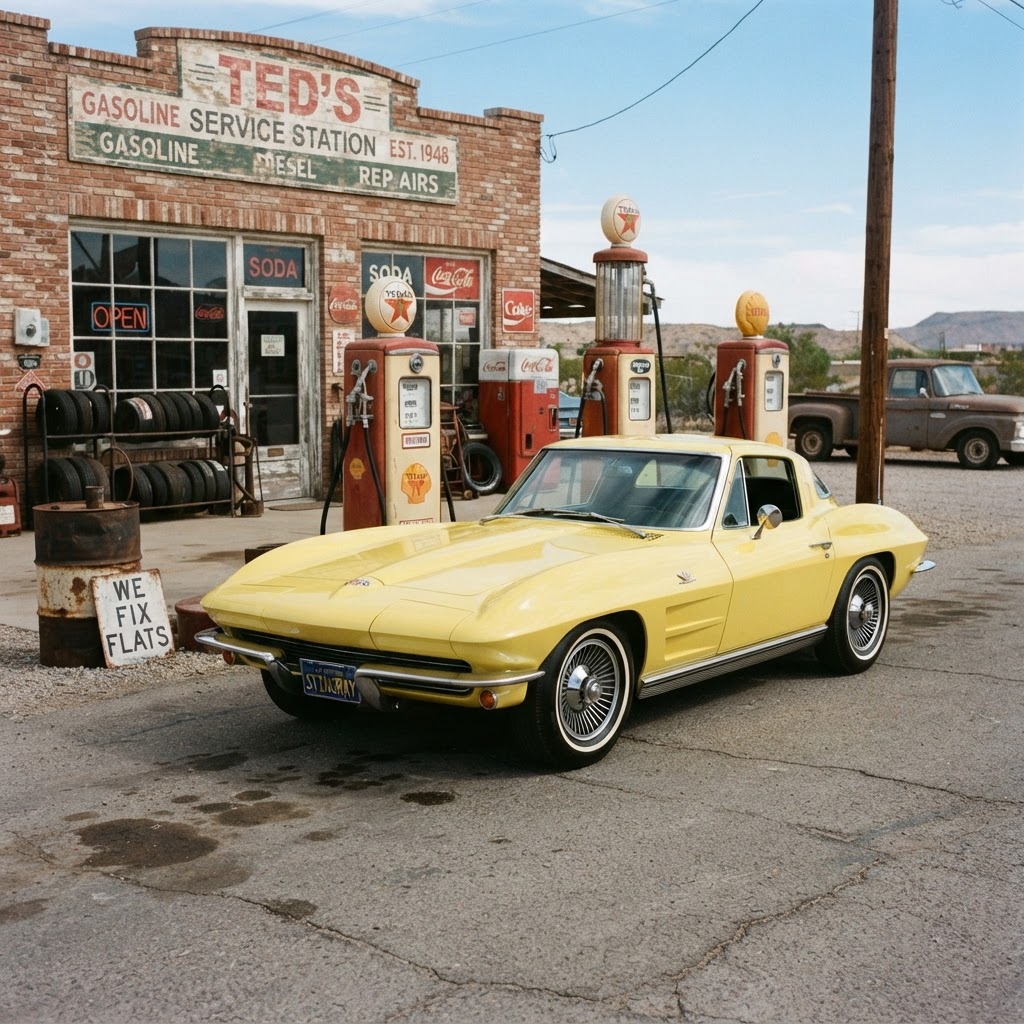
Corvette C2 Sting Ray
1963–1967
The Sting Ray Era
The C2 Story
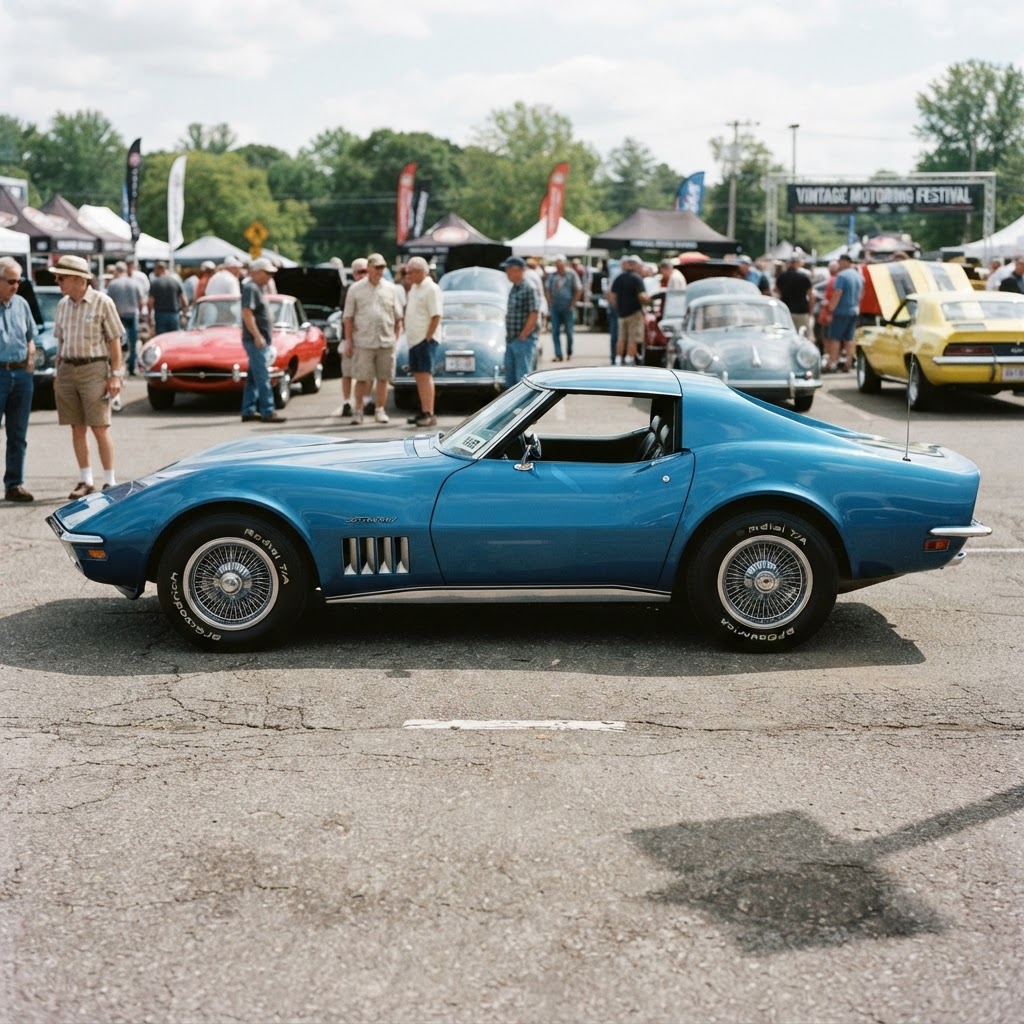
The C2, marketed as the Sting Ray, was a clean-sheet redesign that turned the Corvette from a charming roadster into a serious sports car. With a new independent rear suspension, a fastback coupe body, and styling inspired by racing and marine design, the C2 became an instant icon. It is the generation most enthusiasts point to when they talk about Corvette beauty.
Design Evolution
Bill Mitchell's styling studio gave the C2 its razor-sharp lines, retractable headlights, and a split rear window on the 1963 coupe that remains one of the most debated and beloved details in Corvette history. The body was lower, wider, and far more aggressive than the C1, with a pronounced boat-tail rear and sculpted fenders.
Performance & Engineering
The C2's independent rear suspension was a revelation, giving the car composure the solid-axle C1 never had. Disc brakes arrived in 1965, and the big-block 427 in 1966 made the Corvette one of the fastest production cars in the world. The L88 option, though underrated on paper, was essentially a race engine sold for the street.
Key Characteristics
- Independent rear suspension debuted
- Retractable hidden headlights
- Coupe and convertible body styles
- Big-block V8 options from 1965 onward
Milestones of the Era
Split-window coupe — the most collectible C2 of all.
Four-wheel disc brakes became standard.
427-cubic-inch big-block arrived with massive torque.
Final year, refined trim and the legendary L88 race-bred engine.
Interesting Facts
- ★
The 1963 split-window was changed to a full window after one year due to visibility complaints.
- ★
The Sting Ray name was two words; the later Stingray became one.
- ★
The L88 was so thinly disguised a race engine that Chevrolet quietly discouraged street use.