Corvette C3
1968–1982
The Chrome-Bumper Era
The C3 Story
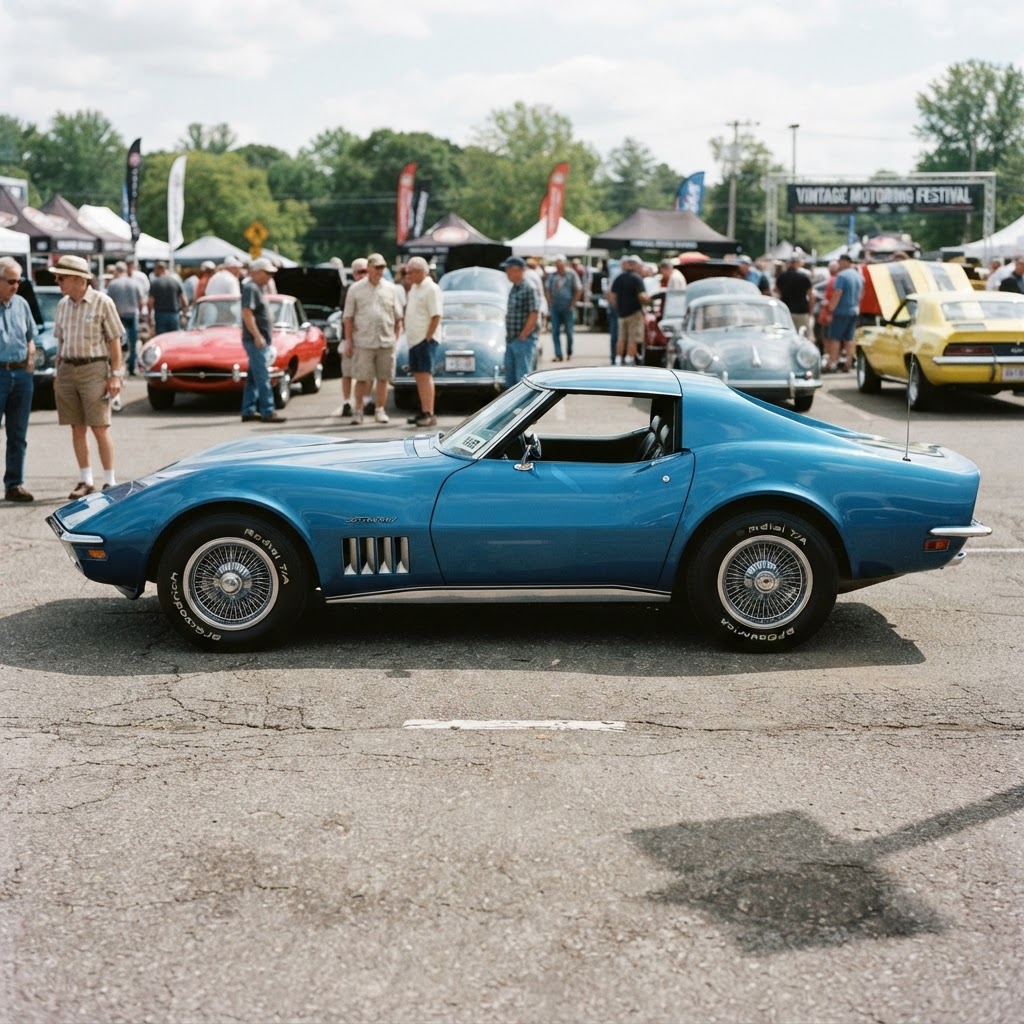
The C3 introduced the dramatic coke-bottle styling that would define Corvette for fifteen years. It arrived at the peak of American muscle and weathered the emissions and fuel crises that followed. Despite changing regulations, the C3 remained a styling benchmark and kept the Corvette flame alive through a difficult decade for performance cars.
Design Evolution
The C3's swooping fenders, removable roof panels, and bold chrome bumpers made it instantly recognizable. As the 1970s progressed, chrome gave way to body-colored impact bumpers, and power figures dropped as emissions controls tightened. The styling remained striking throughout, even as the engines beneath grew tamer.
Performance & Engineering
The C3 began with the most powerful engines Corvette would see for decades and ended with some of the most modest. Through it all, the chassis carried over from the C2 with refinements. The introduction of T-tops gave owners a convertible-like open-air feel with coupe security, and the 1982 Crossfire injection previewed the electronic future.
Key Characteristics
- Coke-bottle body with removable T-top roof panels
- Chrome bumpers early, body-colored bumpers later
- Big-block and small-block V8 options
- Longest production run of any Corvette generation
Milestones of the Era
All-new body with T-top roof introduced.
Flared fenders and the 454 big-block arrived.
Convertible ended temporarily; catalytic converters added.
Final C3, with the first throttle-body fuel injection.
Interesting Facts
- ★
The C3 was inspired by the Mako Shark II concept car.
- ★
T-top roofs were so popular that coupe buyers rarely chose the full convertible.
- ★
By the late 1970s, advertised horsepower had fallen well below the C3's early peak.